
How to Resolve Conflict with a Friend Without Making It Worse
Learn 7 proven ways to resolve conflict with a friend without making things worse. Expert communication techniques, repair strategies, and actionable steps to fix your friendship.
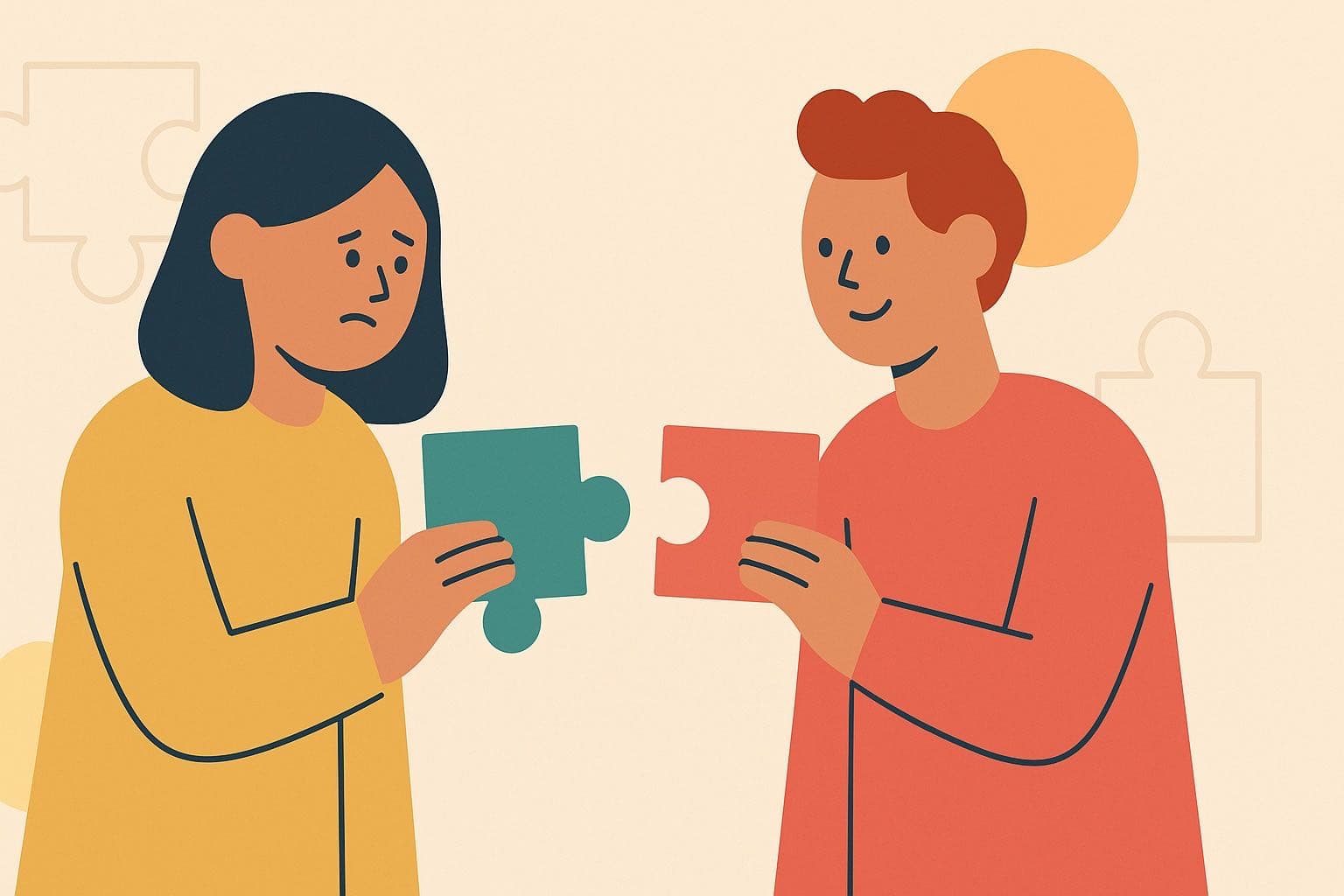
Friendships bring joy, support, and meaning to our lives. But when conflict strikes, it can feel like walking through a minefield blindfolded.
You don't want to make things worse. You don't want to lose someone who matters. And you definitely don't want to say the wrong thing that turns a small disagreement into a friendship-ending blow-up.
The good news? Conflict doesn't have to destroy your friendship. With the right approach, you can work through disagreements and come out stronger on the other side.
This guide will show you exactly how to handle friend conflicts without escalating them, damaging trust, or creating more problems than you started with.
Why Friend Conflicts Cut So Deep
Here's what makes friendship conflicts different from other disagreements: there's no rulebook.
You get endless advice about romantic relationships. But friendships? You're supposed to figure it out on your own.
Friendships lack the societal guidance that romantic relationships get—no established break-up scripts, no couple's therapy packages, and definitely no clear framework for working through problems.
That's why a fight with a friend can leave you spiraling. You're not overreacting. You're experiencing the natural confusion that comes when two people try to navigate conflict without a map.
Research shows that conflicts reveal deeper needs in friendships. When facing conflict, you're often dealing with unspoken expectations about boundaries, respect, or simply feeling heard and valued.
The conflict isn't just about what happened. It's about what it means.
The #1 Mistake That Makes Friend Conflicts Worse
Want to know the fastest way to turn a small issue into a friendship-ending disaster?
Let it sit.
When you avoid addressing conflicts quickly, bad feelings and negative thoughts fester and grow—like popcorn left in the microwave too long, it burns up and ruins everything.
Here's what happens when you don't talk about it:
- You start talking to other people instead of your friend
- Friends pick sides
- Gossip spreads
- The original issue gets buried under layers of hurt
Suddenly everyone is mad at everyone else. The thing that could have been solved with one honest conversation becomes a full-blown friendship crisis.
But here's the catch: you also can't solve everything in the heat of the moment.
How to Handle the Initial Impact
When conflict hits, your brain goes into fight-or-flight mode. Your emotional brain takes over and rational thinking goes out the window.
You're tempted to fire off that text. Send that message. Say what you're thinking right now.
Don't.
Before you respond to a conflict, pause and avoid spiraling into worst-case scenarios like "She hates me" or "We're never recovering from this." Give yourself space to breathe.
Here's what to do instead:
Take 24 hours to cool down. Not 24 days. Not 24 minutes. Just enough time to get out of your emotional reaction and into your thinking brain.
During this cooling-off period:
- Write out your feelings (but don't send them)
- Do something physical to burn off the emotional energy
- Talk to a neutral third party who won't fuel the drama
The goal isn't to bury your feelings. It's to calm yourself enough to communicate clearly.
Step 1: Name What's Actually Bothering You
Most friend conflicts aren't about what they appear to be about.
You're upset that your friend canceled plans. But underneath that? You feel unimportant. Left out. Like you're not a priority.
Often you're fighting about something small on the surface, but deeper emotions like feeling excluded, unseen, or unimportant are driving the real conflict.
Before you talk to your friend, get clear on what's really bothering you:
- What happened (the facts)
- How you felt about it (the emotions)
- What need wasn't met (the deeper issue)
This clarity will transform your conversation from an accusation into an invitation to understand each other better.
Step 2: Start the Conversation the Right Way
How you begin the conversation determines how it will go.
One effective technique therapists recommend is to name the situation, say how you're feeling, and explain how you want to resolve it.
Here's the formula:
- State the specific situation (not your interpretation of it)
- Share your emotional response (without blame)
- Express your desired outcome (focus on resolution)
Good example: "Last week when you canceled our plans without telling me, I felt hurt and unimportant. Can we talk about what's going on so this doesn't keep happening?"
Bad example: "You always cancel on me and clearly don't value our friendship anymore."
See the difference? The first opens a door. The second slams it shut.
Tools like Peachi.app can help you prepare for these tough conversations by giving you a structured space to organize your thoughts and practice expressing yourself before the real talk happens.
Step 3: Listen More Than You Talk
This is where most people blow it.
They're so focused on making their point that they forget to hear what their friend is saying.
Active listening involves giving your full attention, showing empathy by trying to see things from their perspective, and reflecting back what they've said to ensure you've understood correctly.
Here's how to do it:
- Put your phone away (no, checking it during the conversation doesn't count as listening)
- Make eye contact
- Don't interrupt or plan your response while they're talking
- Repeat back what you heard: "So you're saying that..."
Your friend needs to feel heard before they can hear you.
When both people feel understood, resolution becomes possible.
Step 4: Take Ownership of Your Part
Here's the uncomfortable truth: unless the conflict is truly one-sided (toxic, unsafe, or harmful), you probably contributed to the problem somehow.
Taking responsibility for your part—even if it's small—can defuse tension and open the door to repair in the friendship.
This doesn't mean taking all the blame. It means acknowledging what you did that made things worse.
Maybe you:
- Made a comment that landed wrong
- Didn't express a need clearly
- Were unavailable during a time they needed you
- Let something build up instead of addressing it sooner
Apologizing sincerely when you've hurt your friend's feelings and expressing willingness to work toward a resolution encourages them to listen to you.
Humility isn't weakness. It's a superpower in friendships.
Step 5: Focus on Solutions, Not Winning
The goal isn't to prove you're right.
Healthy and effective conflict resolution is not about winning or losing—it's about working toward mutual understanding or at minimum, mutual respect.
Ask yourself: Do I want to be right, or do I want to preserve this friendship?
Sometimes you can't both get everything you want. Be solution-minded and propose ways you can come together, while also being a sensitive listener and letting your friend speak.
Brainstorm together:
- What boundaries would help prevent this from happening again?
- What do each of you need to feel respected and valued?
- How can you both show up better for each other?
Create an agreement you both can commit to. Then follow through.
Step 6: Watch Out for These Escalation Traps
Even with the best intentions, certain behaviors will make conflicts worse:
Don't bring up old issues. Stay focused on the current conflict. Dredging up past mistakes creates defensiveness.
Don't involve other people. This isn't a court case where you need witnesses. Keep the conversation between you and your friend.
Don't use absolutes. Words like "always" and "never" are rarely accurate and make people defensive. Be specific instead.
Don't text about serious issues. Tone gets lost in text messages. Save important conversations for face-to-face or at least voice-to-voice communication.
Being open to feedback and willing to apologize when needed, rather than being one-sided in communication, helps resolve conflicts and strengthens the relationship long-term.
When to Get Help
Sometimes you need outside support to work through a conflict.
If you find it difficult to resolve the conflict on your own, consider seeking help from a neutral mediator—a trusted mutual friend, a counselor, or a professional mediator who can facilitate communication and help both parties find common ground.
A mediator creates a safe space for honest communication. They can help when:
- Emotions are too high for productive conversation
- The same patterns keep repeating
- You're stuck and can't find common ground
- The relationship feels worth saving but you don't know how
Peachi.app offers guided frameworks for working through friendship conflicts, helping you structure difficult conversations and navigate repair with evidence-based communication techniques.
Knowing When to Let Go
Not every conflict leads to reconciliation.
Sometimes clarity reveals that the relationship wasn't built to last, and recognizing this is okay.
You might need to consider ending the friendship if:
- The conflict reveals fundamental value differences
- Your friend isn't willing to work on the relationship
- The friendship has become toxic or harmful
- You've tried repeatedly and nothing changes
Letting go isn't failure. Sometimes it's the healthiest choice for everyone involved.
We naturally lose friendships every seven years for various reasons, and this is a normal part of life and relationship evolution.
The Bigger Picture: Conflict as Growth
Here's what nobody tells you about friendship conflicts: they're opportunities.
The healthiest, closest friendships are ones where people have had disagreements and arguments, and have been able to work through those together.
When you successfully navigate conflict with a friend:
- You build deeper trust
- You strengthen your communication skills
- You learn more about yourself and what you need
- You prove the friendship can withstand difficult moments
Relational conflict gives you insight into how you manage anxiety, what resources you draw on during unexpected stressors, and reveals your core beliefs about friendship that shape your expectations and behaviors.
The friendships that last aren't the ones without conflict. They're the ones where both people are willing to do the hard work of working through it.
Your Action Plan for Resolving Friend Conflicts
Here's your roadmap when conflict hits:
- Pause and breathe. Take 24 hours to get out of emotional reaction mode.
- Identify the real issue. Go deeper than surface-level complaints.
- Reach out quickly. Don't let bad feelings fester for weeks.
- Use the conversation formula. Name it, share feelings, express desired outcome.
- Listen actively. Your friend needs to feel heard before they can hear you.
- Own your part. Take responsibility for whatever you contributed.
- Focus on solutions. Work together toward a resolution that works for both of you.
- Follow through. Keep the agreements you make.
Remember: conflict reveals what matters. It shows you care enough to work through the hard stuff instead of walking away.
Frequently Asked Questions
How long should I wait before talking to my friend about a conflict?
Wait about 24 hours after the conflict to cool down emotionally, but don't let it drag on longer than a few days. The sweet spot is giving yourself enough time to think clearly without letting negative feelings build up and harden into resentment.
What if my friend refuses to talk about the conflict?
Give them space but be clear that you want to work things out. Send a simple message: "I know things are tense between us. I value our friendship and want to talk when you're ready." If they continue refusing after multiple attempts, you may need to accept that they're not willing to work on the relationship.
Should I apologize even if I don't think I did anything wrong?
You can acknowledge your friend's feelings without agreeing you were wrong. Try: "I hear that what I did hurt you, and I'm sorry you felt that way. Can you help me understand your perspective better?" This validates their experience while leaving room for further discussion.
How do I know if a friendship is worth saving after a conflict?
Ask yourself: Does this person usually treat me with respect? Have they shown they're willing to work on issues? Do we share core values? Is this a pattern of behavior or a one-time issue? If the conflict reveals consistent disrespect or unwillingness to change, it might be time to let go.
What if I keep making the same mistakes in all my friendships?
This is a sign you might benefit from working on your communication patterns. Consider talking with a therapist or coach who can help you identify patterns and develop healthier ways of relating to friends. Self-awareness is the first step toward change.
Can texting ever work for resolving serious conflicts?
Texting works for setting up the conversation ("Can we talk about what happened?") but not for the actual resolution. Tone, body language, and nuance get lost in text. Save the real conversation for video chat, phone call, or in-person meeting where you can actually read each other's emotional cues.
Ready to Fix Your Friendship?
Friend conflicts are painful, but they don't have to end your relationship.
The tools and techniques in this guide will help you navigate disagreements without making things worse. But sometimes you need more structured support to work through the repair process.
Peachi.app gives you the framework, prompts, and guidance to navigate difficult friendship conversations with confidence. Whether you're preparing for a tough talk, working through ongoing tension, or trying to rebuild trust after a conflict, Peachi helps you communicate clearly, express yourself authentically, and repair your most important friendships.
Stop letting conflicts destroy friendships that matter. Start the repair process today with Peachi.
Related Articles

Digital Tools for Friendship Restoration for Teens and College Students: 7 Apps That Actually Work
Discover 7 powerful digital tools that help teens and college students repair broken friendships. From AI coaches to structured conversations, learn how to fix friendships fast.
Digital Tools for Friendship Restoration: How to Blend Online and Offline Repair
Discover proven digital tools and strategies to restore damaged friendships. Learn how to combine online platforms with offline actions for meaningful reconciliation.
Conflict with a Friend? A Step-by-Step Fix
Learn how to fix a friendship after conflict with proven communication strategies, emotional repair techniques, and actionable steps to rebuild trust.

How to Survive a Friend Breakup When You Share the Same Friend Group (Without Losing Your Mind)
Friend breakups hurt worse when you share the same social circle. Learn proven strategies to heal, set boundaries, and navigate awkward group dynamics without losing yourself.